
Red Robin serves 4 Veggie & More items in 2026 — the Impossible™ Cheeseburger, the Veggie, The Wedgie™ and the Turkey Burger — priced from $11.99 to $15.19. The lightest is the Veggie at 490 calories, the heaviest is the Impossible™ Cheeseburger at 750, and the patty-swap system lets you put a veggie or plant-based patty on almost any burger on the menu.
Red Robin’s Veggie & More menu offers flavorful choices for guests looking for meat-free meals and lighter food options. It offers delicious plant-based options, fresh ingredients, and pleasing blends to suit different preferences. No matter if you prefer a veggie burger or another meat-free option, this menu section has tasty choices to satisfy your cravings.
All 4 Veggie & More Items with Prices & Calories
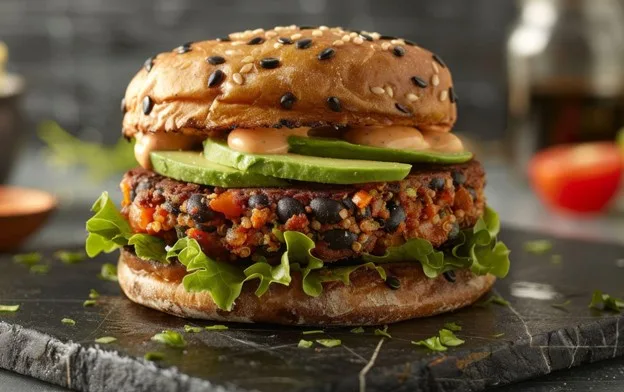
The Impossible™ Cheeseburger
$13.09 | 750 Cal
The Impossible™ Cheeseburger is the plant-based Impossible patty cheeseburger — and, at $13.09 and 750 Cal, the heaviest item on this page.
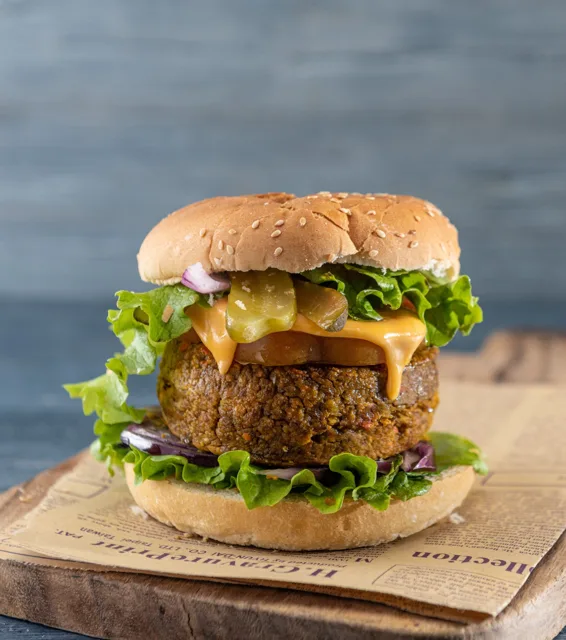
Veggie
$13.99 | 490 Cal
Veggie is the veggie burger — and, at $13.99 and 490 Cal, the lightest item on this page.
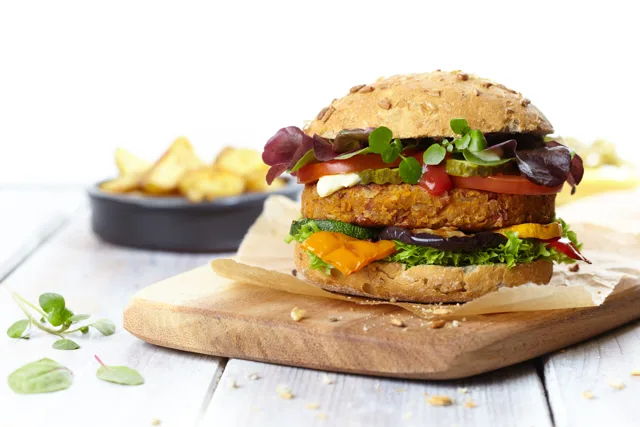
The Wedgie™
$15.19 | 680 Cal
The Wedgie™ is the lettuce-wrap build — and, at $15.19 and 680 Cal, the priciest item on this page.
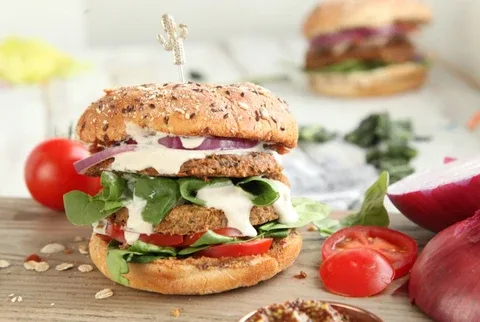
Turkey Burger
$11.99 | 640 Cal
Turkey Burger is the turkey burger — and, at $11.99 and 640 Cal, the cheapest item on this page and the lightest meat option.
A note on the names: “Veggie” is the full name of the second item on the owner’s menu — it is not short for something longer, and it is not the same item as the Impossible™ Cheeseburger. The two are different patties, different prices and different calories, and the comparison below explains how they differ. The Turkey Burger is the only item on this page that is not meat-free: it is turkey, and it belongs here because it is the lighter meat option, not because it is vegetarian. The Wedgie™ is not a patty at all — it is a build, and the section below explains it.
Prices may vary by location.
Impossible Cheeseburger vs Veggie Burger
The two meat-free patties on this page look like the same meal, and they are not. They are different patties, different prices, different calories — and the choice between them is the main decision on this page. The owner’s figures separate them cleanly: the Impossible™ Cheeseburger is $13.09 and 750 calories; the Veggie is $13.99 and 490 calories. The Veggie costs $0.90 more and carries 260 fewer calories. That is the whole comparison in one line — and the rest of this section explains why.
The Impossible™ Cheeseburger — the plant-based patty, and the heaviest item on the page.
The Impossible™ Cheeseburger is $13.09 and 750 calories on the owner’s menu — the heaviest item on this page, and the second-cheapest. It is the plant-based Impossible patty served as a cheeseburger, and the owner’s article confirms the brand carries the Impossible Burger at its US locations (line 467: “The restaurant’s official FAQ mentions veggie burgers and plant-based protein options, including the Impossible Burger at its US locations”). The Impossible patty is designed to eat like beef, and the calories show it: at 750 it is heavier than the Veggie at 490, heavier than the Turkey Burger at 640, and heavier than The Wedgie™ at 680. It is also heavier than the lightest beef burger on the owner’s menu, the Banzai at 720 calories — by 30 calories. So the Impossible is not the light option on this page, and it is not lighter than every beef burger: order it because you want a plant-based patty that eats like beef, not because you want the fewest calories. The “Cheeseburger” in the name matters too: cheese is dairy, so as served the Impossible™ Cheeseburger is not vegan — see the vegan section below for what to hold.
The Veggie — the lightest item on the page.
The Veggie is $13.99 and 490 calories on the owner’s menu — the lightest item on this page, and the second-priciest. At 490 calories it is 260 lighter than the Impossible, 150 lighter than the Turkey Burger, and 190 lighter than The Wedgie™. It is also lighter than every beef burger on the owner’s menu: the lightest beef burger, the Banzai, is 720 calories, so the Veggie is 230 calories lighter than the lightest beef burger Red Robin serves. That is the number that matters if calories are the reason you are on this page. The Veggie is the vegetable-and-grain patty — the traditional veggie burger, not the plant-based meat imitation — and on the owner’s figures it is the clear lightest choice of the four.
The patty ingredients — reported, not in the owner’s article.
The owner’s article gives no patty ingredient list, so the ingredients below come from the keyword map’s research and are presented ONLY as reported, with that caveat stated plainly. The reported comparison: the Impossible patty is built on soy and potato protein, designed to cook and taste like beef; the Veggie patty is built on ancient grains and quinoa, with Swiss cheese, salsa and avocado reported as its toppings. If those toppings are right, the Swiss is dairy — another reason the Veggie as served is vegetarian rather than vegan — and the salsa and avocado are the flavours that set it apart from the Impossible. Confirm the current patty and toppings with your restaurant before ordering, because the article gives no ingredient list and the reported details can change by location. What the owner’s figures do say, without any caveat, is the calorie gap: Veggie 490 against Impossible 750, a 260-calorie difference that no ingredient list can change.
Which one to order.
Order the Veggie if you want the lightest meal on this page and you like a grain-and-vegetable patty — 490 calories, $13.99, and 230 calories lighter than the lightest beef burger. Order the Impossible™ Cheeseburger if you want a plant-based patty that eats like beef — 750 calories, $13.09, and $0.90 cheaper than the Veggie. Order neither for the calories alone without reading the card: the Impossible at 750 is heavier than the Banzai beef burger at 720, so a plant-based patty is not automatically the lighter patty. And if you want the lightest option of all, the Veggie at 490 is the order — it is the only item on this page under 500 calories, and the only item on this page under 600.
The Wedgie™ — Explained
The Wedgie™ is the most misunderstood item on this page, because it is not a patty. It is a build — a way of serving a burger without a bun — and once you understand the build, the price and the calories make sense.
What the owner’s article says.
One line: The Wedgie™, $15.19 | 680 Cal. The article gives no build, no patty list, and no calorie range. Everything below about how the Wedgie is built comes from the keyword map’s research of official location menus, not from the owner’s article — so read it as official-menu information with a vary-by-location caveat, and confirm the current build with your restaurant.
The build — reported, not in the owner’s article.
Per the official location menus, the Wedgie is a build, not a patty: you pick any patty — beef, turkey, grilled chicken or veggie — and it is served in a lettuce wrap instead of a bun, with bacon, smashed avocado, tomato and onion. The lettuce wrap is the point of the item: it is the low-carbohydrate way to eat a burger, and it is the same lettuce-wrap option the owner’s article lists in its customization guidance (line 398: “Guests looking for fewer carbohydrates can ask about a lettuce wrap, an open-faced burger, or a gluten-free bun”). The smashed avocado and the tomato and onion are the fresh toppings; the bacon is the salty, smoky one. The Wedgie is the priciest item on this page at $15.19 — the build costs more than any single patty on the page, because it is a patty plus the avocado and bacon and the wrap.
The calorie range — reported, and it depends on the patty.
The official location menus list the Wedgie at 270–490 calories per build, and that range is the reason the item confuses people. The range exists because the calories depend on the patty you choose: a veggie patty in a lettuce wrap sits at the bottom of the range, and a beef patty with bacon sits at the top. The owner’s figure for The Wedgie™ as listed on this page is $15.19 | 680 Cal — and that is the figure this page uses. The 270–490 range is official-menu information for a build, not the owner’s figure for the listed item, and the two should not be mixed: do not trust guides that list The Wedgie™ at 270–490 calories as if that were the owner’s number. On the owner’s data The Wedgie™ is 680 calories — 190 heavier than the Veggie at 490, and 40 heavier than the Turkey Burger at 640. The lettuce wrap saves the bun, but the bacon and the avocado add calories back, so the Wedgie is not automatically the lightest item on the page.
Is the Wedgie vegetarian?
Not automatically — and the reported build is the reason. The reported build includes bacon, and it offers beef, turkey and grilled chicken patties alongside the veggie patty. A Wedgie built with a beef patty and bacon is a meat meal in a lettuce wrap, not a vegetarian one. A meat-free Wedgie means choosing the veggie patty and holding the bacon — and confirming the current build with your restaurant, because the article gives no build and the reported details can change by location. If you want a meat-free meal and you do not want to negotiate the build, order the Veggie at 490 calories: it is meat-free as listed, and it is lighter than The Wedgie™ at 680.
How to Order Vegan at Red Robin
Red Robin does not make vegan ordering easy, and the honest guide says so. The owner’s article is clear about the limits, and the third-party guides fill in the ordering details — but the two are not the same kind of information, and this section keeps them apart.
What the owner’s article says.
The article’s plant-based guidance (line 319) is the foundation: “Guests who prefer plant-based or meat-free meals can look into the Veggie & More option and other customized menu selections. Red Robin’s official FAQ includes veggie burgers and plant-based protein options, such as the impossible burger Burger at its US locations. Some salads and other dishes may also be customizable, based on the ingredients and preparation methods available at the chosen restaurant. However, vegetarian and vegan standards are not always the same. A dish that does not include meat may still contain dairy, eggs, or other animal-derived ingredients. Customers following a strict vegan diet should check the full ingredient details and ask about proper preparing methods before ordering.” That paragraph is the article’s own warning, and it is the rule for this whole section: a meat-free dish is not automatically a vegan dish, and the only way to know is to check the ingredients and ask how it is prepared.
What to hold — reported ordering guidance.
The third-party vegan guides (worldofvegan.com, godairyfree.org) give the same practical list, and it is presented here ONLY as reported ordering guidance, not as the owner’s fact: hold the cheese, hold the mayo, and hold the aioli. Cheese is dairy. Mayo is egg-based. Aioli is egg- and dairy-based. The Impossible™ Cheeseburger as served carries cheese in the name, so a vegan order means holding the cheese — and asking whether the bun is vegan, because the article gives no bun ingredient list. The Veggie as served carries reported Swiss cheese, salsa and avocado, so a vegan order means holding the Swiss — and asking about the patty, because the article gives no patty ingredient list. The article’s own lighter-eating guidance supports the same moves from a different angle: remove cheese, request sauces on the side, choose grilled chicken instead of a beef patty, opt for a lettuce wrap (line 406). The moves are the same; the reason is different — calories in the article, animal ingredients here — and the article’s advice to check the full ingredient details and ask about preparation methods applies to both.
What Red Robin does NOT guarantee.
This is the part the third-party guides are blunt about, and it is presented here ONLY as reported, with that caveat stated plainly. Red Robin publishes NO vegan designation: according to an allergen-report fact-check (canveganseat.com), the word “vegan” appears zero times in Red Robin’s 14-page allergen report. That means no item on the menu is officially designated vegan by the restaurant — not the Impossible, not the Veggie, not the sides. The same fact-check reports that the cleanest allergen row is Keep It Simple — Veggie (no eggs, no milk, no cross-contact listed), that the Impossible Patty alone declares Soy only, that the Veggie Patty declares Soy only, and that Roasted Garlic Aioli declares Eggs + Milk. The cross-contact warning is the other half: food is “prepared in a common kitchen”, and fried items may share oil with animal items — so a fried side that contains no animal ingredients can still have been cooked in oil shared with animal items. The owner’s article gives the same warning in its own words for gluten (line 408: “cross-contact can occur during food preparation processes. Shared cooking tools, preparing surfaces, and fryers may create risks”), and its advice is the same in both cases: inform the restaurant team about your needs before placing an order so they can clarify the safety measures. So the honest vegan answer at Red Robin is a process, not a menu item: pick the plant-based patty, hold the cheese, mayo and aioli, ask about the bun and the patty ingredients, ask how the sides are cooked, and tell the team what you need. Do not call any item “vegan” on this page — Red Robin itself does not.
Gluten-Free Guide
The gluten-free story at Red Robin is a customization story, not a separate menu — and the owner’s article tells it in its own words.
What the owner’s article says.
The article’s gluten-free guidance (line 408) is the foundation: “Guests who are allergic to gluten can look into several menu modification options at Red Robin. Based on the item and restaurant, choices may include a gluten-free bun, a lettuce-wrapped burger, chosen salads, and certain sides. A gluten-free bun can be an option for guests who prefer a traditional burger style. A lettuce wrap is a different option for those who want to skip traditional bread. However, not every menu item or ingredient is automatically declared gluten-free, so checking the complete ingredient details is important. Guests with celiac ailment or a serious gluten allergy should take extra care because cross-contact can occur during food preparation processes. Shared cooking tools, preparing surfaces, and fryers may create risks even when an ingredient does not include gluten. Red Robin offers an allergen-friendly menu tool that helps customers filter food choices based on dietary constraints. It is also a good idea to inform the restaurant team about your needs before placing an order so they can clarify the available safety measures.” That paragraph supports three things on this page: the gluten-free bun exists as a modification option, the lettuce wrap exists as a modification option, and neither one is automatic or guaranteed — the cross-contact warning and the advice to inform the team apply to both.
The bun, the wrap, and the salads.
The gluten-free bun is the option for guests who want a traditional burger style — a bun, not a wrap — and it is a modification you ask for, not a separate menu item. The article gives no price for the gluten-free bun, so this page gives none: ask at your restaurant whether there is an extra charge, because the article’s customization guidance says extra charges may vary by location (line 398). The lettuce wrap is the other option, and it is the same wrap that makes the Wedgie — so a gluten-free burger can be a lettuce-wrapped burger, and the Wedgie build is the ready-made version of it. The chosen salads are the third option: the article lists them alongside the bun and the wrap, and the Salads page lists the seven salads with their prices and calories — but not every salad is automatically gluten-free, so check the ingredients and ask the team, exactly as the article advises.
The purple pick and the dedicated station — reported, not in the owner’s article.
The third-party guides report two details that the article does not mention, and both are presented here ONLY as reported, with that caveat stated plainly. The first is the purple pick: a purple-topped pick or marker placed in a gluten-free order to flag it in the kitchen, so the team can see at a glance that the order needs gluten-free handling. The second is a dedicated gluten-free station, reported in a DoorDash review, where gluten-free orders are prepared away from the main line. Neither detail is in the owner’s article, and neither is confirmed by the article — so treat them as reported, ask at your restaurant whether they apply at your location, and do not present them as the owner’s facts. What the article does confirm is the allergen-friendly menu tool and the advice to inform the team — and those two are the reliable steps at every location.
The vegan breads — reported, not in the owner’s article.
The dairy-free guide (godairyfree.org) lists vegan breads — brioche, tavern, tortilla and lettuce wrap — as options at Red Robin. That list is reported, not in the owner’s article, and it is presented here ONLY as reported, with the caveat stated plainly. The article supports the lettuce wrap and the gluten-free bun as modification options, and it supports asking about the bun — but it gives no bread list, so the brioche, tavern and tortilla names come from the third-party guide, not from the article. If you need a vegan bread, ask at your restaurant which breads are available and which are vegan at your location, and check the allergen tool before ordering.
Patty Swaps on Any Burger
The Veggie & More section has four items, but the patty-swap system is what makes the whole menu vegetarian-friendly — and the owner’s article is the source for how it works.
What the owner’s article says.
The article’s customization guidance (line 398) is the foundation: “One of the best things about the Red Robin menu is the option to customize your burger specific to your taste and dietary requirements. Guests can make changes to the patty, bun, cheese, condiments, sauces, and sides instead of ordering every burger precisely as listed. You can choose a different type of protein, remove ingredients you do not enjoy, or add extra toppings in order to create a meal that suits your tastes. Red Robin also offers choices such as grilled chicken, turkey, veggie patties, and plant-based patties at designated locations. The bun can also be adjusted. Guests looking for fewer carbohydrates can ask about a lettuce wrap, an open-faced burger, or a gluten-free bun. You can also request sauces on the side to control how much you use. Before placing your order, check the offered customized options at your location because ingredients, substitutes, and extra charges may vary.” That paragraph supports the mechanism: the patty is a choice, not a fixed part of the burger, and veggie patties and plant-based patties are among the choices — at designated locations, with extra charges that may vary.
The named examples — reported, not in the owner’s article.
The keyword research gives two named examples of the swap in action: a Keep It Simple with a veggie patty, and a Red’s Cheeseburger with a veggie patty. Both are presented here ONLY as reported examples, not as the owner’s facts. The article supports the mechanism — “you can choose a different type of protein” — but it does not name these two swaps, and it gives no swap price for either one. So this page gives no swap price for either example: ask at your restaurant what the swap costs, because the article says extra charges may vary by location. The same rule applies to the calories: the article gives no calorie figure for a burger with a swapped patty, so this page gives none. A Keep It Simple is $12.19 and 850 calories with its beef patty, and a Red’s Cheeseburger is not on the owner’s burger list as a named item — but neither figure tells you the calories of the same burger with a veggie patty, because the patty is the part that changes. Do not invent a swapped-burger calorie figure.
How to use the swap.
Pick the burger you want for its toppings and sauces, then ask for the patty you want. The toppings stay; the patty changes. A Whiskey River® BBQ burger with a veggie patty keeps the Whiskey River® BBQ sauce and the toppings, and a Banzai with a plant-based patty keeps the Banzai build. The swap is the way to eat the burger menu without beef, and it is the reason the Veggie & More section is four items and not forty: the four are the dedicated items, and the swap is the system that turns the other fifteen burgers into veggie options. See the Burgers page for the fifteen burgers and their owner’s prices and calories — and remember that the prices and calories there are for the burgers as listed, with their beef patties, not with a swapped patty.
Vegan-Friendly Sides to Pair
A veggie burger needs a side, and the Bottomless sides are the natural pairing — but “plant-based on the menu” and “vegan” are not the same thing, and this section keeps them apart.
The plant-based sides on the owner’s data.
The owner’s Bottomless sides include several that are plant-based on the menu, with the owner’s prices and calories: Steamed Broccoli $6.79 | 160 Cal, House Salad $3.49 | 390 Cal (Bottomless section), Yukon Chips $4.49 | 350 Cal, Sweet Potato Fries $6.59 | 580 Cal, and Steak Fries $5.89 | 600 Cal. The Steamed Broccoli is the lightest side on the owner’s data at 160 calories, and the Yukon Chips at 350 are the lightest fried side. The House Salad at $3.49 is the cheapest Bottomless side on the owner’s data. These are the sides to pair with a Veggie or an Impossible patty when you want the meal to stay plant-based — and the Bottomless name means free refills when you dine in, like the other Bottomless items. See the Bottomless page for the full Bottomless sides and the free-refill rules.
The ones to ask about.
Not every plant-based-looking side is vegan as served, and the names give the warning. Garlic Parmesan Broccoli is $6.89 | 450 Cal on the owner’s data — and parmesan is dairy, so it is not vegan as served. Coleslaw is $3.79 | 600 Cal — and coleslaw dressing is usually mayo-based, so ask about it before ordering. The Everything Caesar Salad—Side is $6.99 | 560 Cal — and Caesar dressing is egg- and dairy-based, so it is not vegan as served. The fries are the question mark: Steak Fries, Garlic Fries and Sweet Potato Fries are potato-based, but the article gives no vegan designation for any fried item, and the reported cross-contact warning says fried items may share oil with animal items. So the honest answer for the fries is to ask at your restaurant how they are cooked — do not call them vegan on this page, because neither the article nor Red Robin designates them vegan. The same rule applies to every side on this page: plant-based on the menu is a description of the ingredients, not a vegan designation, and the article’s advice is to check the full ingredient details and ask about preparation methods before ordering.
FAQs
Does Red Robin have a veggie burger?
Yes. Red Robin serves two meat-free patties on the owner’s menu: the Veggie at $13.99 and 490 calories, and the Impossible™ Cheeseburger at $13.09 and 750 calories. The owner’s article confirms the brand carries veggie burgers and plant-based protein options, including the Impossible Burger at its US locations. The patty-swap system also lets you put a veggie or plant-based patty on almost any burger on the menu — see the patty-swap section above.
Is the Impossible Cheeseburger vegan at Red Robin?
Not as served. The “Cheeseburger” in the name is the answer: cheese is dairy, so the Impossible™ Cheeseburger as served is vegetarian, not vegan. A vegan order means holding the cheese and asking about the bun and the patty ingredients. And Red Robin itself does not designate any item vegan — according to an allergen-report fact-check, the word “vegan” appears zero times in Red Robin’s 14-page allergen report — so treat the vegan question as a process (hold the cheese, mayo and aioli, check the ingredients, ask how it is prepared) rather than a menu label. The owner’s article gives the same warning in its own words: a dish without meat may still contain dairy, eggs or other animal-derived ingredients.
What is the Wedgie at Red Robin?
The Wedgie™ is a build, not a patty: per the official location menus, you pick any patty — beef, turkey, grilled chicken or veggie — and it is served in a lettuce wrap instead of a bun, with bacon, smashed avocado, tomato and onion. The owner’s figure for The Wedgie™ as listed is $15.19 | 680 Cal. Do not trust guides that list it at $16.59 and 270–490 calories: the 270–490 figure is a per-build range from official location menus that depends on the patty you choose, and the owner’s figure is 680. The reported build includes bacon, so a meat-free Wedgie means choosing a veggie patty and holding the bacon.
Does Red Robin have gluten-free buns?
Yes, as a modification option. The owner’s article says guests who are allergic to gluten can look into several menu modification options, including a gluten-free bun, a lettuce-wrapped burger, chosen salads and certain sides. But not every item is automatically gluten-free, and cross-contact can occur through shared cooking tools, surfaces and fryers — so check the complete ingredient details, use Red Robin’s allergen-friendly menu tool, and inform the restaurant team before ordering. The article gives no price for the gluten-free bun, so this page gives none — ask at your restaurant.
What is the lowest-calorie veggie option at Red Robin?
The Veggie at $13.99 and 490 calories on the owner’s menu — the lightest item on this page, and 230 calories lighter than the lightest beef burger, the Banzai at 720. Do not trust the 270–490 calorie range for The Wedgie™ as the answer: that range is a per-build range from official location menus that depends on the patty, and the owner’s figure for The Wedgie™ as listed is 680 calories. The second-lightest veggie option is the Turkey Burger at 640 calories — but the Turkey Burger is turkey, not meat-free.
Can I swap a veggie patty into any burger?
The owner’s article supports the mechanism: guests can change the patty, bun, cheese, condiments, sauces and sides, and Red Robin offers grilled chicken, turkey, veggie patties and plant-based patties at designated locations. The named examples (Keep It Simple veggie, Red’s Cheeseburger veggie) come from the keyword research, not the article. The article gives no swap price and no swapped-burger calorie figure, so this page gives neither — ask at your restaurant what the swap costs, because extra charges may vary by location.
Is the Turkey Burger healthier than a beef burger?
On the owner’s figures, yes — the Turkey Burger is $11.99 and 640 calories, and it is lighter than every beef burger on the owner’s menu: the lightest beef burger is the Banzai at 720 calories, so the Turkey Burger is 80 calories lighter than the lightest beef burger, 210 lighter than the Keep It Simple at 850, and 190 lighter than the Red Robin Gourmet Cheeseburger at 830. It is also the cheapest item on this page. But the Turkey Burger is turkey — it is the lighter meat option, not a meat-free one — so it belongs on this page for its calories, not for its protein source.
Are Red Robin fries vegan?
The owner’s article gives no vegan designation for the fries, and Red Robin does not designate any item vegan. The fries are potato-based on the menu — Steak Fries $5.89 | 600 Cal, Garlic Fries $6.89 | 320 Cal, Sweet Potato Fries $6.59 | 580 Cal, Yukon Chips $4.49 | 350 Cal — but the reported cross-contact warning says fried items may share oil with animal items, so a potato side can still have been cooked in shared oil. Do not call the fries vegan on this page. Ask at your restaurant how they are cooked, and check the full ingredient details before ordering.
Final Thoughts
Red Robin’s Veggie & More menu is the smallest section on the menu — 4 items, priced from $11.99 to $15.19, from 490 to 750 calories — and the most flexible, because the patty-swap system turns the whole burger menu into veggie options. Start with the Veggie at 490 calories if you want the lightest meal on the page, the Turkey Burger at $11.99 and 640 calories if you want the cheapest item and the lightest meat option, or the Impossible™ Cheeseburger at $13.09 and 750 calories if you want a plant-based patty that eats like beef. Order The Wedgie™ at $15.19 and 680 calories if you want the lettuce-wrap build — and remember it is a build, not a patty, and the bacon in the reported build means a meat-free Wedgie needs the bacon held. And remember the four figures that trip people up: the Veggie is 490 calories, not 720; The Wedgie™ is 680, not 270–490; the Turkey Burger is $11.99 and 640, not $17.29 and 780; and the Impossible at 750 is heavier than the Banzai beef burger at 720. Read the card, not the name, and check the full menu with prices and calories on the homepage, and download the printable version from the Menu PDF page.
Related Menus
- Burgers — 15 gourmet burgers, the mains the patty swap applies to
- Bottomless — all Bottomless sides and drinks, and the free-refill rules
- Salads — 7 fresh salads, including the gluten-free modification options
- Entrées — 12 entrées, including the lightest entrée on the menu
- Red Robin Menu PDF — printable menu
- Red Robin Menu — Homepage — all 239 items
- Healthiest Red Robin Options — lowest-calorie picks
- Red Robin Royalty Rewards — 1 point per $1, $10 per 100 points